Apps for Dyslexic Learners:
• Sound Literacy
• What is Dyslexia
• Dyslexia Quest
• Happy Math Multiplication Rhymes
• Read 2 Me
• Phonics with Phonograms
• Dyslexia
• DD’s Dictionary: A Dyslexic Dictionary
Apps for Autistic Learners:
• Sight Words
• Sequences for Autism
• See, Touch, Learn
• Words on Wheels
• Verbal Me
• Autism iHelp
• Autism/DDT Shapes
• Autism DDT Letters
• Speech with Milo
Apps for the Visually Impaired:
• VIA
• Dragon Dictation
• Light Detector
• Colour ID
• TapTapSee
• Be My Eyes – Helping Blind See
• Talking Calculator
• SayText
• AccessNote
• Visual Brailer
Apps for Learners with Writing Difficulties:
• The Writing Machine
• iWrite Words
• Letter School
• Alpha Writer
• ABC Pocket Phonics
• Word Magic
Encouraging reading culture and writers in a nation does monumental things to develop it and preserve it.
When you read a good story, it has the power to make you a little more wiser, a little more empathetic (by seeing through the eyes and experiences of someone other than yourself). With regular reading being a sort of passively internalized training in the art of writing; reading books equips you with the possibility of becoming a skilled writer yourself.
When a story is written, that is a story documented, and henceforth, a story made immortal. So our nations need a tradition of reading, we need writers. For our cultures, for our history.
Why is it that the habit of reading is so rare when the benefits are so vast? I have heard people from around the world say, ‘I don’t read much, but I enjoy The Harry Potter series.’ Something about this literature appeals to the masses, which is a good thing. It has won fans all over the globe, but I have to point out that it is a modern fiction with no characters that are people of colour. It is very western and it is very commercial. So, I only hope that it’s the gateway to more readership; readership filled with more diversity and culture.
Another reason not many pass-times are filled with book reading is because people are often made to believe that reading is only associated with academia. Yet another reason is that people find that buying books is expensive. I do realize that reading books for leisure is a luxury (it is costly) but it is also a worthwhile investment.
And of course, libraries are available and they are free. I refer to them as urban sanctuaries. Inquire with people in your town, or even search on the internet for libraries in your region.
Let us normalize the joy of reading and encourage the reading of books for recreation so that kids will maintain book reading well into adulthood. Let us make a conscious effort in reading books from all over the world of narratives not spoken enough of globally. African, Asian, Middle Eastern, South American, Native American, Caribbean, Aboriginal, etc.
One place working to promote reading culture in Tanzania is the Soma organisation. They are doing beautiful work. They host several events during the year pertaining to literature, poetry, arts and culture. The last event I went to was a very lovely memorial for the late writer and Nobel Prize winner Toni Morrison. Because I spoke so passionately about literature and the author at the event, the director, Madam Demere Kitunga, gave me an impromptu invitation to mediate part of their public discussion. I very enthusiastically accepted and felt so elated to be able to contribute to the program. And that is just how Soma Book Club is: giving everyone a voice and facilitating public platforms whenever possible for all.
The Soma organisation is currently teaching extracurricular classes for children to become more exposed to literature and to also learn how to write their own stories. What a great way to uplift our children.
Here are some other places making readership and literature available to both children and adults:
• Soma: Leisure and Culture – www.somabookclub.com
• Mkuki na Nyota Publishers – www.mkukinanyota.com
• Novel Idea – (If a book is not available in your store for a deposit, they would happily order it in for you)
• University of Florida’s free Baldwin Library of Historical Children’s Literature – https://ufdc.ufl.edu/baldwin/all
• Booksie: African Childrens Bks @mybooksiebox – Available on Instagram for ordering books and a free live children’s books reading every first Saturday of the month.
Now that you know some great outlets that are facilitating the culture of reading, let’s spread the ‘word.’
THE FADING ART OF STORY TELLING IN TANZANIA
There really is no limit for the age you have to be to sit at the feet of an elder and have them tell you captivating stories.
Story-telling is a tradition and ancient art in all of Africa, Tanzania is no exception. So why is it that traditional story-telling is a fading art here?
The only public space I know of that has story-telling for children is the Soma Book Café. Only one consistent place in the whole of Dar es Salaam. I tell stories to children from impoverished backgrounds. All I would do is gather a group of kids from a neighbourhood with the permission of their guardians, then have a story session with snacks. I’d tell a story that I then invited them to discuss and ask questions about, and intriguing conversations would flourish out of this.
I once tried to do this with a puppet I personally went to a tailor to make. I named my puppet Dada Tumaini, meaning Sister Hope in Kiswahili. Not only that, but I tried her out several times with an audience. It was a disaster. I found out the hard way that ventriloquism is not for me. I was inspired by Jim Henson’s Muppets and Lamb Chop, the puppet created by Shari Lewis (I always giggle to myself when I think of her because she must have quite a naughty sense of humour to name her knitted talking lamb ‘Lamb Chop’). But my puppeteering attempt did not go well with any group of kids, so Dada Tumaini has since retired to a storage room at home.
My inspiration and passion for story-telling began with watching a renowned storyteller from Ethiopia known affectionately as Ababa Tesfaye when I was a child. Ababa Tesfaye is a national hero in Ethiopia. He passed away at the age of 94 in 2017 and remains a well-loved legend. Ababa Tesfaye was so compelling in his art as a storyteller that he hardly needed anything to become one of the greatest icons of Abyssinia. When you watched him tell stories on television, he just sat in a chair, wearing ordinary clothes with a plain blue background. The pictures that occupied his stories that were usually about talking animals and carried a moral were simple and made on a black chalk board with white chalk. But Ababa Tesfaye’s stories were riveting! He was expressive, he gave the animal characters special voices. His animated facial expressions alone were enough to entertain you. He was wonderful.
We should have at least one great storyteller we broadcast across the nation and revive this art that was once so common in our villages and amongst our ancestors. Our children should have a national hero they can meet at school to talk about or reminisce about fondly 30 years from now.
Why are we not providing these kinds of platforms? I subscribe to DSTV (our continent’s cable television) and on all the mainland Tanzanian channels provided there I do not see any children’s programs or story-telling on a regular week day. It is not on our radio channels, either.
Where are our story-tellers, puppeteers, child entertainers? It should be a national quest to find them. And give them a platform. Collaboration is important. Because some have the will, but not the talent. And some have the talent but not the funding. And some have the funding but don’t know about the bureaucracy or the process to access a national platform.
But we can start small. In your families, in your neighbourhoods, in your schools. Let us keep the tradition of story-telling alive.
PROBLEMS WITH THE CURRENT STATE
OF TANZANIAN CHILDREN’S BOOKS
All over Africa, the art of story-telling has existed for centuries. Stories have passed through the generations verbally, and we are still honing the art, business and public service of making books.
Are there not enough Tanzanian children’s books in the United Republic of Tanzania? No, that is not the case. There are plenty. The problem exists in prevalence of quantity, but not quality. What is lacking? Not the stories. Whether simple or complex, new or old, Tanzania is not short of good children’s stories. The problem is the presentation. As children’s story writers, we have to think of ourselves as chefs, and think of children as guests in a 5-star restaurant. A significant part of the literary meal we serve lies in its presentation. The presentation of the meal is part and parcel of the entire dining experience. Before that plate of delicious themes and well seasoned characters leaves your kitchen, it ought to be a delectable and glorious feast for the eyes.
Before they are old enough to read chapter books, children interpret most of the world through images and pictures. A child of 2 years of age is not going to pick up a book and say, ‘I think I’ll read this book here because it has very interesting intellectual content.’ No. She or he is going to look at the pictures and judge the book on that. Imagine how wonderful the world of literature would seem to a child if the pictures were dynamically creative, if the colours were bold and the protagonists appeared cleverly detailed. This is what I often do not see in Tanzanian children’s books.
The illustrations in Tanzanian children’s books are very often the same. There is a generic method of drawing that you would typically see in template Tanzanian newspaper comics. Not the witty, satirical comics, but the type of common comic that might be about more mundane topics. Like an illustrated guide of how to get one's passport at the immigration office. Now let us think about how enthusiastic a child would be about seeing the same sort of illustrations in a book that was supposed to intrigue them.
Art is vital and Tanzania needs to learn to have more reverence for it. If the country did, I think we would encourage artists to take courses, travel abroad and collaborate in projects that would inspire more creativity and more dynamism for the world of children’s book illustration. We need this because art is part and parcel with literature in producing great children’s books. And if we want creative, innovative, articulate, well-read citizens, children’s books are where we need to start.
If you are going to be a children’s book writer, be passionate about it and couple that passion with the aesthetics that make your product a sight to behold. Remember, children are sensorial beings.
Set the imagination free, appeal lavishly to a child’s eyes. If I may use the food analogy again: A child ought not to look at a shelf of children’s books and see a cabinet of dull vitamin supplements. A child ought to look at a shelf of books and see a beautiful buffet of nourishing cuisine. Serve it up! And do so with flamboyance and pizazz.
Saving the Environment
My beloved friend Dr. Helen Neville is not only an incredible inspiration to everyone she meets, but also one of the kindest, most compassionate and generous people I know. She brought me wonderful gifts from the United States that I was already ecstatic about and as if that was not enough to blow me away, to my delight she told me that the wrapping paper they came in had seeds in them and would grow plants when put in soil!
How wonderfully environmentally friendly and uplifting that is! Now you can get all manner of paper, such as wrapping and coffee cups, that is biodegradable and embedded with seeds.
This innovative product is unfortunately not yet available in Tanzania, but here is a list of 19 practical ways you can help save the environment:
1. Use reusable bags: A wonderful new development in Tanzania has been banning plastic bags. Wherever you are in the world, opting for reusable, biodegradable bags is a good idea.
2. Use reusable beverage containers.
3. Buy a water bottle: You can always refill your water bottle and will not have to buy plastic bottles frequently.
4. Invest in a filter: By boiling water and using a filter you can avoid using plastic containers, and it is in fact more convenient as well as economical.
5. Save water: e.g. Try not to leave a tap running.
6. Save electricity: e.g. Switch off the lights if you are not using a room.
7. Avoid using cars or carpool (shared transport).
8. Recycle.
9. Use organic trash as compost.
10. Do not litter.
11. Print less if you can.
12. Use both sides of a page: When writing on paper, try to make full use of a page in order not to waste paper.
13. Choose products that are eco-friendly: By examining the label on a product, you can find out whether it is environmentally friendly or not.
14. Use energy efficient light bulbs.
15. Use rechargeable batteries.
16. Try to keep the use of air conditioners to a minimum if you have to use them at all. Also, make sure all windows and doors are firmly closed when the air conditioner is on.
17. Never leave the fridge/freezer door open when the refrigerator is on.
18. Put recycling bins in your home, office, school, etc.
19. Plant a tree or more!
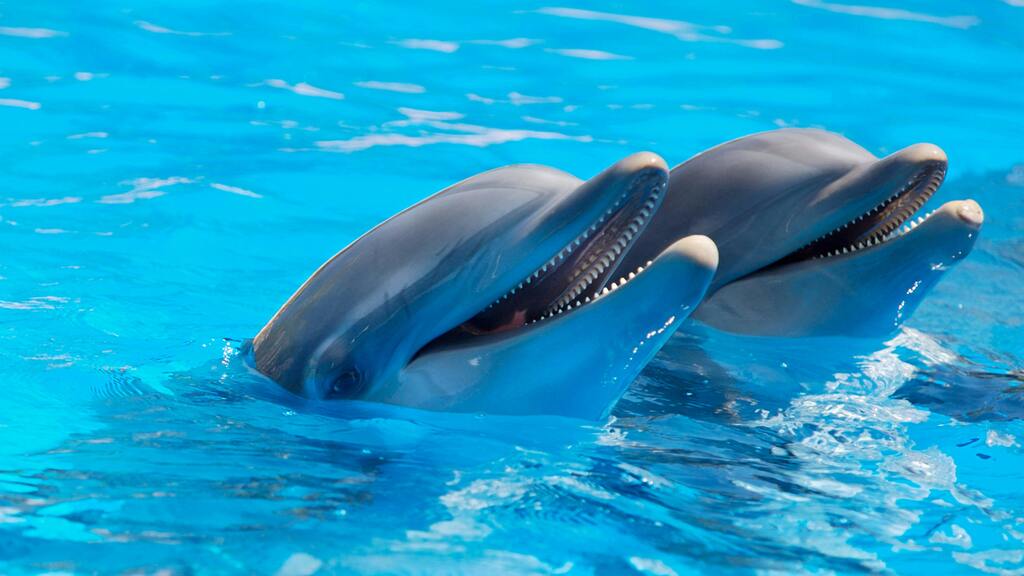
Everyone should be an environmentalist. Caring for the environment should come naturally; as a daily practice, as a lifestyle.
Kids need to learn from the very beginning how important and how magical nature is.
A beautiful part of nature is the creatures that live in it. Teach kids to love animals, care for them and protect their environments.
Some years ago, I adopted a rescue animal. An adorable dog I named Chewbacca (Chewy for short). I now have four dogs. Many years ago I worked with the BBC to raise awareness about the wild animals in the Serengeti and their security. There is a lot one can do.
I have a page on Facebook called “Dogs, Cats and more Creatures.” Please feel free to follow it.
There are plenty of places in nature children can come across animals. I am not a fan of zoos. I see no reason an animal should be behind bars and not in its natural habitat, unless it is for rehabilitation purposes. I am not a fan of animals in circuses either. I do not believe animals should be used for entertainment. (Although I do admit, I did enjoy the “Lassie” movie series. Dogs are exceptional, aren’t they? I guess you could say there are a few things that are an exception if they’re done ethically).
Nonetheless, other than the great outdoors, there are some websites one can utilize to teach kids about animals and nature:
Nat Geo for kids, www.kids.nationalgeographic.com
Switcheroo Zoo www.switcheroozoo.com
People of African descent have contributed fundamentally to the literary world. Let’s start with Ethiopia. The Ethiopian bible is the oldest and only complete bible in the world. It is written in Ge’ez which is an ancient Ethiopian language (extract from New Africa).
The country of Mali has a library with manuscripts that date back to the 8th century AD (theafricanhistory.com).
Alexander Pushkin (1799 – 1837) is known as “The Father of Russian” literature and was of mixed race being of African descent.
Alexander Dumas (1802 – 1870), author of The Three Musketeers was also of African descent.
I implore you to read literature of authors of African descent. Of women and men. For example, Marita Bonner (1898 - 1971) An American teacher who was active in the Black Renaissance of the 1920s.
“The function of freedom is to free someone else.”
- Toni Morrison
This philosophy is so essential to building a better world. Do whatever is necessary, do whatever is meaningful, do whatever is within your capacity. Enlightenment, empowerment, emancipation, empathy. These are the four E’s we need to build our future.
Several governments, organizations and educators are implementing the service of free education. The benefits of this is of the greatest magnitude for the sustainable development of all societies. Education is the one way an individual can conquer the hurdle of economic and social oppression. Free education truly is the pathway to an earthly salvation for many, and it is what every nation should aim to provide.
With the power of the internet, some sources of this work for empowerment and emancipation of the people are available all over the world. When considering free education that is globally available, the following are leaders in this realm:
• University of the People – www.uopeople.edu
• Coursera - www.coursera.org
• Alison - www.alison.com
• Udemy - www.udemy.com
• Edx- www.edx.org
• Future Learn - www.futurelearn.com
• Udacity - www.udacity.com
• Teach 2030 – (for teachers) www.teach2030.com
Let us acknowledge these revolutionaries that are implementing real and tangible change in the lives of many. They are transforming the globe in a monumental, groundbreaking way. Let us wholeheartedly applaud them.
Now, let us also not forget that there are still many who do not have access to this free learning and are in need of education. This is the case for various reasons, such as the lack of availability of the internet or a computer or other such technology. There can also be the language barrier. As you may have discovered, all the free education providers listed in this article use English as the medium of instruction.
Considering these hindrances to accessibility, it is apparent that we still need to make committed efforts to reach the grassroots and the marginalized.
I am currently teaching free adult classes for the English language and entrepreneurship for individuals who have not been able to pursue higher education and come from deprived backgrounds. One of my students cannot read or write. It would be ideal if we could take the time to learn literacy, however, she works full-time and has responsibilities at home. Time is the one thing she does not have, and this is the reality for many adult learners. So I try to meet her halfway and audio record lessons for her so she can have some way of having them documented for review.
The rise of smartphone use has made the days of internet cafés more or less a thing of the past. The unfortunate thing about this is that the common man or woman who cannot afford a computer hardly has any common access to a PC. And if a person cannot afford a smartphone there is no public service that allows for the access of the internet (or if they are, they are very few and very far between). It’s almost an all or nothing situation. If people can’t afford the gadgets, then they are left with very few provisions to compensate for that. In this prospect, you might say that the gap between the haves and have-nots has become broader. I am using the term ‘have and have-nots’ tentatively to illustrate a point.
I am going to segway a bit here because for a moment it is necessary to debunk this phrase ‘the haves and the have-nots’ before it blinds us of other broader horizons. This term only takes into consideration economic status, but there are other things one can ‘have’ that are not related to economic wealth. Such as: cultural wealth, spiritual wealth, wealth in health, wealth in wisdom, etc. To ‘have’ is not only wealth based on currency. One of these alternative wealths could very well create a life far more enriching than money could buy. Let us not allow these terms in the English language to make our perceptions narrow or our thinking obtuse.
With that being said, let us return to the topic at hand, which is: accessibility to education. Free formal adult education is oftentimes only accessible with the knowledge of the English language and/or the availability of certain technologies.
Let us avidly cheer on the providers that are facilitating free education worldwide. Let us also look to making sure free education is available for our brothers and sisters in the grassroots or who are marginalized. Even if all you have time for is one individual person. That education could change the trajectory of their lives for generations. Let us galvanize for this, if not with our time, then in resources (technology, an old functioning phone you no longer use, books and stationary, etc). Some people collaborate with an external family or person to financial fund their school fees. Education is a necessity and a right for all. Thank you for taking the time to read this article.
DAR ES SALAAM
Suji Flowers
Flowers
Plants
Pots
Wholesale and retail
Garden repair and maintenance
Landscaping and designing
Contract:
+255 754 294 558
Flower Shop TZ
Instagram: @flowershoptz
Bouquets
Gifts
Paintings
Gardening
Plant rental
Tiaras
Indoor plants
Pots: clay. Cement. Plastic
Upendo Herbs
Herbs
Herbalism education
Contact:
+255 656 916 630
DODOMA
Ethanim Flowers
@ethanim_flowers_dodoma
Flowers
Pots
Soil
Fibre
Gardening
MOSHI
Moshi Flowers
Instagram: @moshi_flowers
Flowers
Garden design and maintenance
Fruits
Trees for homes and farms
MOROGORO
Flowers Avenue TZ
Large nursery
Horticulture advice
Landscape design
Contract:
+255 754 939 008
Location:
Msamvu. Morogoro
Karibu Art Gallery
Contact:
+255 767 444 888
Nafasi Art Space
Contact:
+255 757 820 426
Location:
Mikocheni
Dar es Salaam
Nyumba ya Sanaa
Contact:
*255 714 964 622
Location:
Near Serena Hotel
Tinga Tinga Arts Cooperative Society
Location: Haile Selassie road
Dar es Salaam
Bagamoyo College of Arts
Contact:
National Museum
Contact:
+255 2
Location:
Shaaban Robert St. Posta
Dar es Salaam
National Museum of Tanzania Village Museum
Contact:
022 270 0437
Location:
Mwenda St
Dar es Salaam
Contact a fashion designer that can redesign your style for comfort and elegance or cultural aesthetic
An organizer or interior designer can turn your environment into a stress-free joyful space
Engineers and architects can help make spaces comfortable for disabilities
To join our team please send a message and we shall send you free wellness resources
Contact:
+255 777 089 361
Contact a story teller. historian. tour guide. culturist. comedian. conversationalist. etc. and share the joy. You can register with us. Just send a message
Medical science says good conversation is not just enlightening. It also helps reduce anxiety. hypertension.stess etc.
You can register with us and when you adhere to our code of ethics. you shall get free wellness practitioner training